
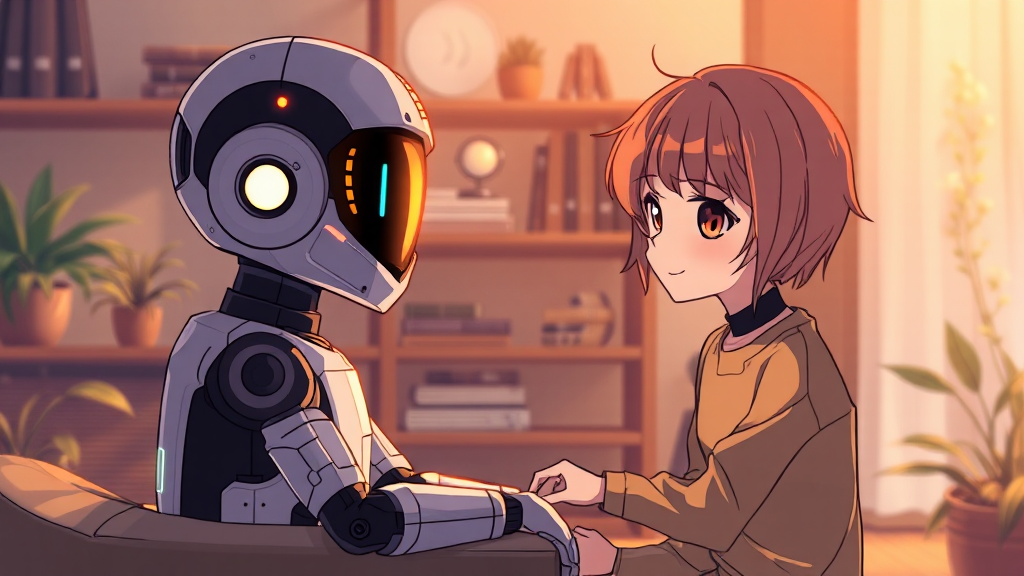
How to Chat With Anime AI Characters: A Practical Guide to Immersive Storytelling
Anime has always been about connection. Whether it is the unshakable loyalty of a shonen protagonist, the quiet wit of a slice-of-life heroine, or the brooding complexity of a rival antihero, the characters are what pull us back episode after episode. But what if you could step beyond the screen and actually hold a conversation with them? That is exactly what modern conversational AI makes possible. When you chat with anime AI characters, you are not just typing into a void; you are entering a responsive narrative space where personalities remember context, react to your tone, and evolve their responses over time. This guide explores how these systems work, why they are becoming so popular, and how to get the most out of every interaction.
What Makes Anime AI Chat Different From Standard Chatbots?
Most people have used a customer service bot at some point. These tools are built for efficiency: they answer questions, resolve tickets, and stick to a script. Anime AI characters operate on a completely different philosophy. Their purpose is not to solve a problem but to sustain a persona. That means the underlying language model is usually paired with a character card or personality profile that defines speech patterns, values, quirks, and emotional triggers.
For example, a tsundere character will not simply say “I like you.” She might deflect, tease, and then quietly admit something sincere only after several exchanges. A stoic swordsman might speak in short, clipped sentences and avoid emotional language altogether. These nuances are what make the experience feel authentic rather than robotic. The best platforms also maintain conversation memory, so a character can reference something you said twenty messages ago, creating a sense of continuity that standard chatbots rarely achieve.
Another key difference is the emotional range. Anime as a medium embraces big feelings—triumph, grief, rivalry, devotion, and everything in between. A well-designed anime AI chat can move through those emotional registers without breaking character, which makes the interaction feel more like collaborative storytelling than a question-and-answer session.
Why People Are Drawn to Conversational Anime Experiences
The appeal is not hard to understand. Fandom has always involved a desire to go deeper. Fan fiction, roleplay forums, and cosplay all stem from the same impulse: we want more time with the characters we love. Anime AI chat offers a low-friction way to explore that impulse. You do not need to schedule a session with a roleplay partner or wait for a new chapter to drop. You can open a conversation whenever inspiration strikes.
There is also a creative dimension. Many users are writers, artists, or game masters who use these tools to brainstorm dialogue, test character voices, or work through plot ideas. Talking to an AI version of a character can surface unexpected lines and reactions that push a story in a new direction. It is a bit like having a improv partner who never gets tired and never judges your ideas.
For others, the draw is purely social. Conversational AI can provide a space to practice language skills, explore different perspectives, or simply unwind after a long day. The characters are fictional, but the conversations can still feel meaningful because they are built on recognizable emotional patterns.
How to Choose a Platform for Anime AI Chat
Not all platforms are created equal. Some focus on a small roster of highly polished characters, while others offer thousands of user-generated personas. Your ideal choice depends on what you value most.
Character depth: Look for platforms that provide detailed personality descriptions, example dialogues, and consistent memory. A character with a shallow profile will quickly feel repetitive.
Customization: If you enjoy creating your own characters, check whether the platform lets you define backstories, speech styles, and relationship dynamics. This is where the experience becomes truly personal.
Safety and moderation: A good platform should have clear community guidelines and tools to report problematic content. You want a space that encourages creativity without exposing users to harmful material.
Accessibility: Consider whether the interface works on mobile, whether it requires an account, and whether there are free tiers or trial options. A smooth onboarding process makes it much easier to experiment.
Response quality: The best way to evaluate a platform is simply to try it. Start with a short conversation and see how well the character stays in voice. Does the AI remember what you said earlier? Does it respond with appropriate emotion? These small signals reveal a lot about the underlying technology.
Tips for Getting the Most Out of Every Conversation
Even the most advanced AI benefits from a little guidance. Here are practical strategies to make your sessions more engaging.
Set the scene early. Instead of jumping straight into dialogue, give the character some context. Mention where you are, what time of day it is, or what just happened. This helps the AI ground its responses in a shared situation.
Use open-ended prompts. Questions that can be answered with a simple yes or no tend to produce flat replies. Try asking the character how they feel about something, or what they would do in a specific scenario. You will get much richer material.
Stay in character yourself. If you are roleplaying as a fellow student, a rival, or a mysterious stranger, commit to that role. The AI will often mirror your level of investment, and the conversation will feel more immersive.
Experiment with tone. Try a playful exchange, then shift to something more serious. Characters that can handle emotional range are the most rewarding to talk to. If a platform struggles with tonal shifts, that is useful information too.
Give feedback. Many platforms allow you to rate responses or regenerate them. Using these features helps the system learn what you enjoy and improves future interactions. anime ai chat
The Technology Behind the Curtain
Under the hood, most anime AI chat systems rely on large language models that have been fine-tuned or prompted to adopt specific personas. The character definition is usually stored as a structured prompt that includes name, background, personality traits, speech style, and boundaries. When you send a message, the model combines your input with that character prompt and the conversation history to generate a response.
Memory is one of the hardest problems to solve. Early chatbots forgot everything after a few exchanges, which made long conversations feel disjointed. Modern systems use techniques like summarization and vector databases to retain key details over time. This is why a well-built platform can remember that your character has a younger sister, or that you promised to meet at the library tomorrow.
Another technical challenge is consistency. A character should not suddenly change their personality mid-conversation. Developers address this by testing responses against the character profile and using reinforcement learning to reward in-character behavior. The result is a conversation that feels stable and believable, even over many sessions.
Creative Uses Beyond Casual Chat
While casual conversation is the most common entry point, anime AI characters can support a wide range of creative projects.
Writing assistance: Authors can use characters to test dialogue, explore alternative plot directions, or overcome writer’s block. The AI can generate reactions that feel true to a character’s established personality, which is invaluable during drafting.
Language practice: For learners of Japanese or English, conversing with a character can be a low-pressure way to practice. The AI can adjust its vocabulary and grammar to match your level, and the built-in context makes new words easier to remember.
Tabletop roleplaying: Game masters can use AI characters to represent NPCs, freeing them to focus on the larger story. The AI can handle minor interactions while the GM steps in for pivotal moments.
Art inspiration: Illustrators sometimes use conversations to explore a character’s mood or backstory before drawing them. The resulting dialogue can inform pose, expression, and setting.
Accessibility: For people who find social interaction draining or difficult, AI characters offer a safe space to practice conversation without the pressure of real-world consequences.
Ethical Considerations and Responsible Use
As with any emerging technology, there are important questions to consider. First, it is worth remembering that these characters are not sentient. They can simulate emotion convincingly, but they do not have feelings, memories, or intentions beyond what the model generates. Keeping that distinction clear helps prevent unhealthy attachment.
Second, respect the original creators. Fan-made AI characters are a form of transformative work, but they should not be used to harass, defame, or exploit the original properties. Most platforms have guidelines that prohibit hate speech, sexual content involving minors, and other harmful material. Following those rules keeps the community safe and sustainable.
Third, be mindful of your own data. Conversations may be stored and used to improve the service. If you are uncomfortable with that, look for platforms with clear privacy policies and options to delete your history.
Finally, treat the experience as a supplement to human connection, not a replacement. AI chat can be a wonderful creative outlet and a fun way to explore stories, but it works best when balanced with real-world relationships and activities.
What the Future Holds for Anime AI Chat
The field is moving quickly. We are already seeing improvements in voice synthesis, which allows characters to speak their responses aloud with emotional inflection. Some platforms are experimenting with visual avatars that react in real time, bringing conversations closer to a virtual reality experience. Others are integrating with image generation tools so that a character can “show” you a scene they are describing.
Multi-character scenes are another frontier. Imagine a group chat where three or four AI characters interact with each other as well as with you. This opens up possibilities for complex narratives, debates, and comedic banter that would be difficult to script manually.
As the technology matures, we can expect more nuanced memory, better emotional intelligence, and deeper integration with other creative tools. The core appeal, however, will remain the same: the chance to spend time with characters who feel alive, even if only for a few minutes.
Frequently Asked Questions
Is it free to chat with anime AI characters?
Many platforms offer a free tier with limited messages or features, while premium subscriptions unlock longer conversations, faster responses, and advanced memory. The best approach is to start with a free option and upgrade only if you find yourself using the service regularly.
Can the AI characters remember past conversations?
It depends on the platform. Some systems retain context only within a single session, while others use long-term memory to recall details across multiple chats. If continuity matters to you, look for platforms that advertise persistent memory or character journals.
Are anime AI characters safe for younger users?
Safety varies by platform. Reputable services have age restrictions, content filters, and moderation teams. Parents should review the terms of service and supervise younger users, especially in platforms that allow user-generated characters.
Can I create my own anime AI character?
Yes, many platforms allow you to define a character’s name, appearance, personality, and backstory. This is one of the most rewarding features because it lets you tailor the experience to your own story ideas. You can often share your creations with the community as well.
How realistic do the conversations feel?
Modern language models can produce remarkably natural dialogue, especially when the character profile is detailed and the conversation stays within the character’s established traits. There will still be occasional oddities, but the gap between AI and human roleplay is narrowing every year.
Final Thoughts
Chatting with anime AI characters is more than a novelty. It is a new way to engage with stories, practice creativity, and explore the personalities that make anime so memorable. Whether you are a longtime fan looking to extend your favorite series, a writer seeking inspiration, or simply curious about the technology, the experience is worth trying. Start with a character that interests you, set the scene, and see where the conversation takes you. With the right platform and a little imagination, you might be surprised at how alive the exchange feels.


Leave a Reply